

MAPS will be LIVE on Facebook ~ Saturday, July 12th!
July 10, 2025
Renovation Activities ~ As of 7/27/25
July 27, 2025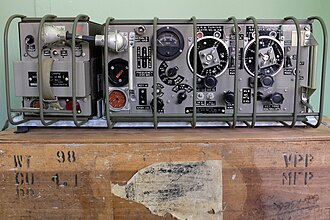
From Richard Willaman:
The EF50 vacuum tube (also known as a valve in the UK) is famously associated with the British Wireless Set No. 19, a mobile radio transceiver used extensively by Allied armored forces during World War II.
Here’s why this connection is notable:

- Advanced Design: The EF50 was a high-frequency RF amplifier designed by Philips in 1938. It was a departure from earlier vacuum tube designs, using an all-glass construction with short, chromium-iron pins, making it suitable for Very High Frequency (VHF) applications.
- Wartime Applications: While initially intended for television receivers, the EF50 quickly found a crucial role in British radar systems and the Wireless Set No. 19.
- Wireless Set No. 19: This radio was designed for use in tanks and other armored vehicles, offering three communication channels:
- A Set: Provided High Frequency (HF) communication over longer distances (up to 50 miles).
- B Set: A Very High Frequency (VHF) transceiver for shorter range, line-of-sight communication between tanks in a troop.
- IC (Intercom) Channel: Enabled communication between crew members inside the tank.
- Role in the Wireless Set No. 19: The EF50 was a key component, particularly in the A Set’s sender or transmitter section. A tuned buffer stage using an EF50 ensured the proper signal output was selected before being sent to the power amplifier stage.
The EF50’s importance during the war led to significant efforts to secure its supply and production after the German invasion of the Netherlands. Its capabilities also made it valuable in post-war applications like oscilloscopes and radio receivers, partly due to the availability of war surplus.
The Radio section at MAPS Air Museum has the main part of the No.19 radio.